How to read a balance sheet
How to read a balance sheet
Your balance sheet can look daunting if you don’t spend much time with company accounts.
There are assets, liabilities, creditors, reserves and several different totals. At first glance, it can be hard to know which figures deserve your attention.
But once you understand how a balance sheet fits together, it becomes much easier to read. It can show you how much your business owns, what it owes and how its financial position is changing.
Here’s how to make sense of yours.
What is a balance sheet?
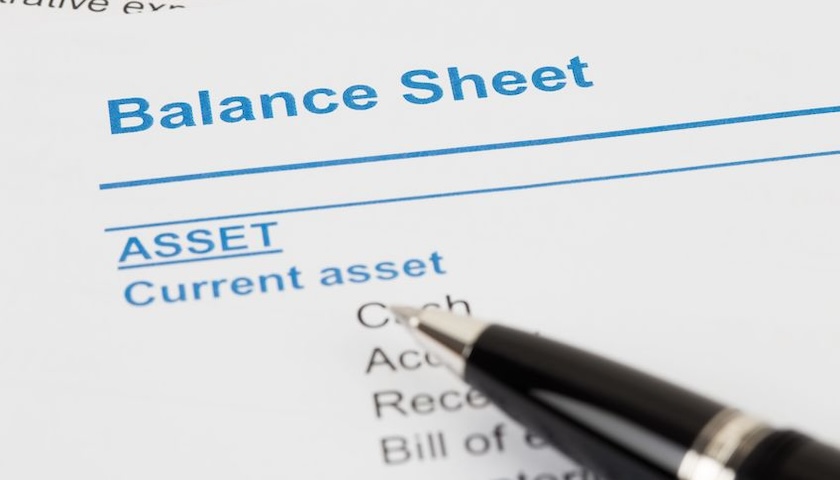
A balance sheet is a snapshot of your company’s financial position at a particular date.
In your statutory accounts, that date will normally be the final day of your financial year. Your balance sheet forms part of the annual accounts you file with Companies House.
Unlike your profit and loss account, it doesn’t cover a period of trading. Instead, it shows what the business owns, owes and is owed on one particular day.
Broadly, a balance sheet is made up of:
- Assets
- Liabilities
- Shareholders’ funds or equity
The exact layout and terminology can vary, but the basic principle is the same. Once you’ve taken the company’s liabilities away from its assets, the figure left is its net assets.
What does a balance sheet show?
The easiest way to understand a balance sheet is to work down it section by section.
1. Fixed assets
Fixed assets, also known as non-current assets, are things the company expects to keep and use for more than a year.
They might include machinery, vehicles, computer equipment or property.
The figure you see in the balance sheet isn’t necessarily what those assets would fetch if you sold them. Accounting treatment such as depreciation can reduce their carrying value over time.
2. Current assets
Current assets are assets that will normally turn into cash, be sold or be used within the normal trading cycle.
They often include:
- stock
- trade debtors
- cash at bank
Trade debtors are customers who owe your business money.
A large debtor figure isn’t automatically good or bad. If sales have grown rapidly, you may expect debtors to rise. However, an increasing figure could also mean customers are taking longer to pay.
3. Creditors due within one year
These are amounts the company expects to pay within the next 12 months.
They can include money owed to suppliers, tax liabilities and short-term borrowing.
It’s worth comparing these liabilities with your current assets. If large bills are due soon but much of your current assets consist of slow-paying debtors or stock, your cash position may need attention.
4. Longer-term liabilities
Some debts fall due more than a year after the balance sheet date.
A business loan is a common example.
Borrowing isn’t necessarily a problem. A loan used to fund productive equipment or expansion may make commercial sense. You need to look at the amount, what the borrowing funded and whether the business can comfortably meet the repayments.
5. Net assets
Once liabilities are deducted from assets, you reach the company’s net asset position.
This figure should match the shareholders’ funds or capital and reserves shown elsewhere on the balance sheet.
A positive figure means the accounting value of the company’s assets exceeds its liabilities at that date.
However, net assets aren’t the same as cash in the bank. Nor do they tell you what somebody would pay to buy the company.
A simple balance sheet example
Imagine a small company has the following balance sheet:
| Balance sheet item | £ |
|---|---|
| Fixed assets | 80,000 |
| Stock | 30,000 |
| Trade debtors | 90,000 |
| Cash | 40,000 |
| Total current assets | 160,000 |
| Creditors due within one year | (100,000) |
| Net current assets | 60,000 |
| Total assets less current liabilities | 140,000 |
| Long-term loan | (50,000) |
| Net assets | 90,000 |
| Capital and reserves | 90,000 |
On its own, that tells you something about the company. It has £40,000 in cash, customers owe it £90,000 and it has £100,000 of liabilities falling due within a year.
But the figures become much more useful when you start asking questions about them.
How do you read a balance sheet?
Start with cash.
Our example company has £40,000 in the bank. You then need some context. Is that enough to cover payroll and other bills over the coming weeks? Is the cash figure normally £100,000? Has it risen or fallen since last year?
Next, look at the £90,000 of trade debtors.
Who owes the money and when is it due? If £60,000 relates to recent invoices from reliable customers, the position may be perfectly normal. If much of it is months overdue, the same balance sheet figure tells a different story.
The £30,000 of stock deserves a similar question. Is it stock the company expects to sell quickly, or has some of it been sitting around for a long time?
Then look at the £100,000 due to creditors within one year. Again, the total alone only tells you so much. You need to know what makes it up and when payments are due.
Finally, look at longer-term borrowing and net assets. Compare both with previous periods rather than treating the latest figures in isolation.
You’re trying to understand what has changed and why.
What should you look for in a balance sheet?
There isn’t one figure that tells you whether a business is financially healthy.
Instead, look for changes that need explaining.
For example, suppose sales have risen but cash has fallen sharply. Look at the debtor figure. Customers may be taking longer to pay.
Or perhaps stock has increased much faster than turnover. There may be a perfectly good reason, such as building inventory ahead of a busy period. Alternatively, cash could be tied up in items that are proving difficult to sell.
Rising short-term liabilities are also worth investigating. The company may simply be larger than it was a year ago, but it could also be delaying payments because cash is tight.
The direction of travel is often more useful than one number.
Can a profitable business have a weak balance sheet?
Yes.
Profit and cash are not the same thing.
A company can make a healthy accounting profit while waiting for customers to pay large invoices. It may also have spent cash on equipment, repaid loans or built up stock.
This is why it’s useful to read your profit and loss account and balance sheet together.
The profit and loss account tells you how the business performed over a period. The balance sheet shows where it stood at the end of that period.
Neither gives you the full picture on its own.
Does a balance sheet tell you what your company is worth?
Not usually.
The net assets figure is an accounting figure, not necessarily a business valuation.
For example, a profitable consultancy might own very few physical assets. Much of its commercial value could come from recurring clients, its workforce, reputation or future profits.
Conversely, an asset shown in the accounts may have a different market value from its balance sheet value.
If you want to know what a business could actually be worth to a buyer, you’ll normally need a separate valuation.
Why compare balance sheets from different periods?
A year-end balance sheet gives you a useful snapshot. Comparing several periods tells you much more.
You might find that:
- Cash is steadily increasing
- Debtors are growing faster than sales
- Borrowing is reducing
- Net assets are building up over time
Annual accounts allow you to compare one financial year with another. However, you don’t have to wait until year end to see what is happening.
Management accounts can include a balance sheet every month or quarter. This gives you a much earlier view of changes in cash, debtors, creditors and borrowing.
If something starts moving in the wrong direction, you have more time to find out why.
Need help understanding your balance sheet?
A balance sheet becomes much more useful when you understand the story behind the figures.
THP can prepare your statutory annual accounts and explain what they tell you about your business. If you need more regular information, our management accounts service can give you an up-to-date view of your balance sheet and other key figures throughout the year.
Speak to our friendly team today if you’d like help preparing your accounts or getting more useful financial information.

About Mark Ingle
Owner-manager business specialist, Mark Ingle is key to building relationships with clients at the Chelmsford office. “I like to see clients enterprises grow and succeed.” Mark explains, “The team here has a lot to offer and I can see a lot of new businesses responding to that.”
Having worked for accountancy practices in London and Essex, Mark has worked with a range of companies varying in size. For Mark, THP stands out for its “local firm approach with the resources of a larger practice.”
Although a keen traveller, Mark is focused on giving his clients at THP the highest service, “Right now, I aim to help the clients we have to the best of my ability which will help me attract more of the right clients in the future.”
Mark’s specialist skills:
- Annual and Management Accounts
- Tax and VAT
- Strategy and Business Planning
- Marketing and Sales
- Business Development
Related Posts
Dormant company accounts: what do you need to file?

Small company reporting requirements: what the government’s 2026 overhaul could mean for you
Missing receipts for business expenses: what can you do?
Work in progress accounting: what should be included at year end?
Year-end accounts preparation: what your accountant needs